Table of Contents
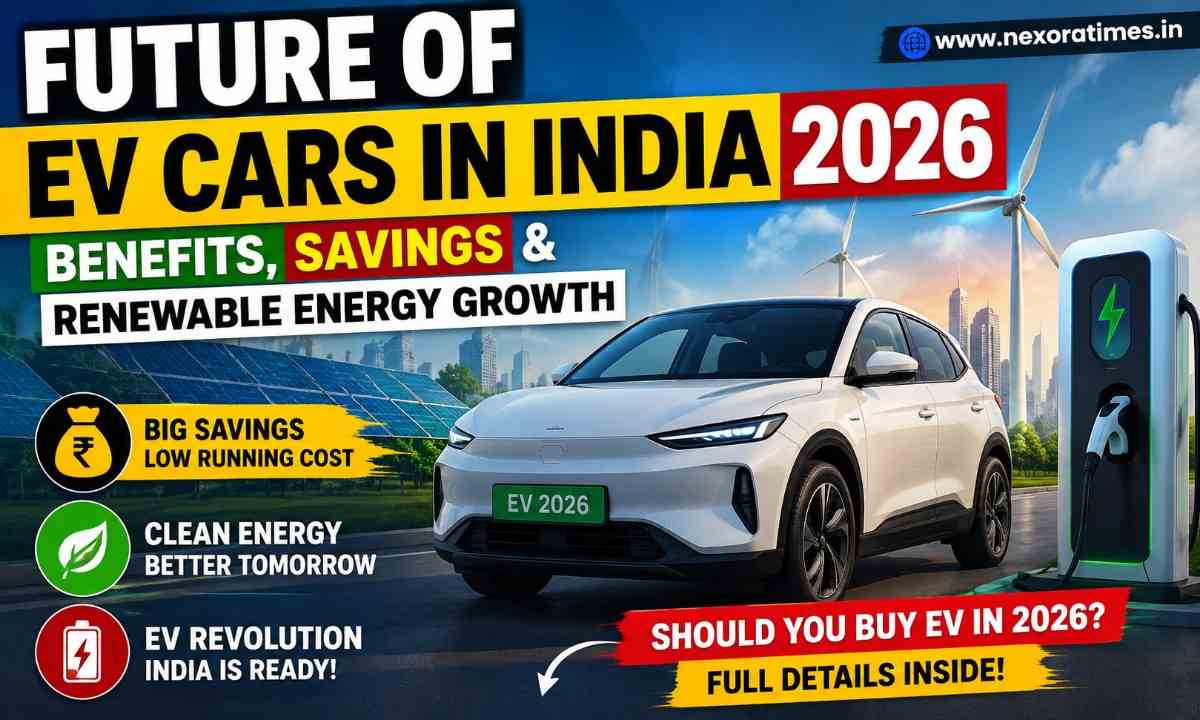
India EV Future 2026 Revealed: Why Electric Cars Are Becoming the Smartest Choice
India’s roads are changing faster than anyone expected. From crowded metro cities to smaller towns, electric vehicles are suddenly becoming the centre of attention.
But the real surprise is not just the rising number of EV cars. It is the massive renewable energy push happening behind the scenes. And experts believe 2026 could become the turning point for India’s electric future.
The future of EV cars in India in 2026 is no longer just a dream. It is becoming a serious lifestyle shift for millions of Indians looking for lower fuel costs, cleaner transportation and smarter long-term savings.
Why EV Cars Are Suddenly Everywhere in India
Just a few years ago, electric cars looked expensive and impractical. Now things are changing rapidly.
Fuel prices continue to rise. Charging infrastructure is improving. Government incentives are attracting buyers. And social media discussions around EV ownership have exploded. That’s why more Indian families are now seriously asking one question: “Should I buy an EV in 2026?” And honestly, the answer depends on one major factor — how India’s renewable energy ecosystem grows over the next few years.
What Is Driving India’s EV Revolution?
India’s EV market growth is connected directly with renewable energy expansion. Solar energy projects, battery manufacturing and green infrastructure are growing together. This creates a powerful ecosystem for electric mobility.
Major Factors Behind EV Growth
- Rising petrol and diesel prices
- Lower EV maintenance costs
- Government subsidies and tax benefits
- Growing charging station networks
- Better battery technology
- Increasing environmental awareness
- Affordable EV launches by major brands
How Renewable Energy Is Supporting EV Cars
Electric vehicles become truly powerful when they run on clean energy. India is aggressively investing in solar power, wind energy and green electricity grids. This means future EV charging could become cheaper and cleaner simultaneously.
Renewable energy helps reduce EV charging costs while lowering pollution and dependence on imported fuel. Experts believe India’s renewable energy capacity could make EV ownership significantly more economical by 2030. And that one detail changed everything for the automobile industry.
Biggest Benefits of EV Cars in India 2026
The future of EV cars in India in 2026 looks promising because buyers are now focusing on long-term savings rather than only purchase price.
1. Massive Fuel Savings
Petrol expenses can heavily impact monthly budgets. EV charging usually costs far less compared to traditional fuel expenses. For daily commuters, the difference becomes noticeable within months.
2. Lower Maintenance Costs
Less engine maintenance, No oil changes, Reduced servicing costs, Better long-term reliability
3. Eco-Friendly Transportation
Carbon emissions,Noise pollution,Fuel dependency
4. Smart Technology Features
AI-based dashboards, Connected car systems, Fast charging support, Advanced safety features, Smartphone integrations
Are EV Charging Stations Improving in India?
Yes — and faster than expected. India is seeing rapid growth in public charging stations across highways, malls, offices and residential areas. Private companies and government-backed projects are heavily investing in EV infrastructure.
Expected EV Charging Trends in 2026
- Fast chargers on national highways
- Smart charging apps
- Home charging setups
- Solar-powered charging stations
- Battery swapping technology
Rural charging infrastructure remains limited in many regions. That’s why buyers in smaller towns should carefully check local charging availability before purchasing an EV.
Should You Buy an EV in 2026?
This is the biggest question dominating online searches right now. If your daily driving is moderate and charging access is available, buying an EV in 2026 could be financially beneficial.
An EV May Be a Good Choice If:
- You drive regularly in cities
- Fuel expenses are high
- You want lower maintenance costs
- You have charging access nearby
- You plan long-term ownership
- Charging stations are unavailable in your area
- You frequently travel long highway distances
- Your budget is very limited
- Government Support Is Changing the Game
- EV subsidies
- Road tax benefits
- Green energy projects
- Manufacturing incentives
- Battery production support
Hidden Challenge Nobody Talks About
While EV growth looks exciting, battery recycling and electricity demand remain major concerns.
- Battery disposal systems
- Renewable energy storage
- Sustainable electricity production
Without these improvements, future EV expansion could face serious pressure. But industry leaders believe innovation and investment will solve many of these issues over time.
FAQs
- Is buying an EV in India worth it in 2026?
Yes, especially for city driving and long-term fuel savings. Charging infrastructure is improving rapidly.
- What is the biggest benefit of electric cars?
Lower fuel and maintenance costs are currently the biggest advantages for most Indian buyers.
- Are EV charging stations available across India?
Charging stations are expanding quickly in major cities and highways, though rural areas still need improvement.
- How does renewable energy help EV cars?
Renewable energy reduces pollution and can lower future charging costs through cleaner electricity production.
- Which type of EV is most popular in India?
Compact SUVs and affordable hatchback EVs are becoming highly popular among Indian families.
Conclusion
The future of EV cars in India in 2026 looks stronger than ever. Rising fuel prices, renewable energy expansion and government support are creating the perfect environment for electric mobility growth. But the real story is bigger than just cars.
For more information, read a post: Petrol vs EV Cost Comparison in India 2026: Shocking Running Cost Difference Every Indian Must Know
Best Budget EV Cars in India 2026 – Price Drop, Range & Full Detail