Table of Contents
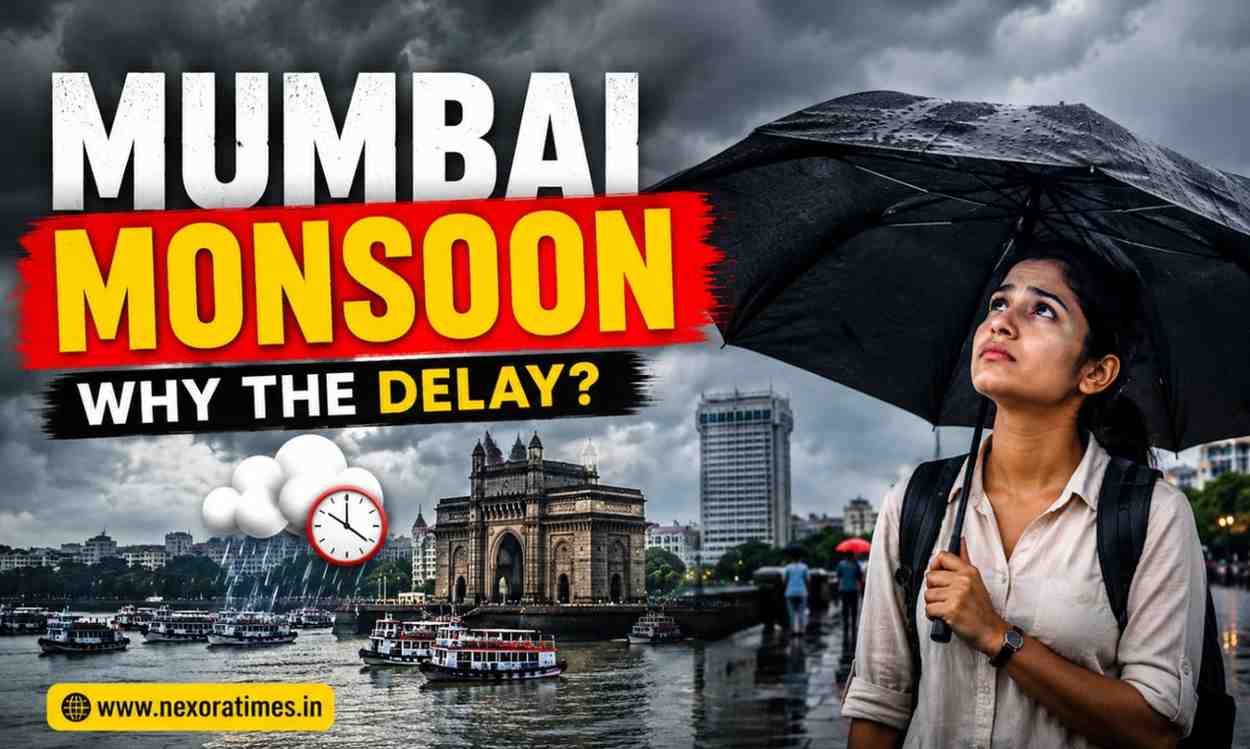
Mumbai Monsoon Delay 2026: Hidden Reasons Why the Rains Are Arriving Late
Instead of relentless showers, Mumbai has been dealing with unusually hot afternoons, sticky nights, and clear skies that feel more like late summer than the beginning of the monsoon season. The city’s residents have been checking weather apps daily, only to find the same frustrating update: “Monsoon arrival delayed.”
That one detail has quickly become one of the most discussed topics across social media. Memes about carrying umbrellas in 35°C heat are everywhere, but behind the jokes lies a growing concern—why is Mumbai still waiting for the rains?
Mumbai’s Monsoon Is Running Behind Schedule
The normal onset date for the southwest monsoon over Mumbai is around June 11.
However, by the third week of June, the monsoon had still not fully advanced into the city and several parts of Maharashtra. Weather agencies say this could make June 2026 one of Mumbai’s driest starts to the rainy season in more than a decade.
The delayed arrival is not due to a single weather event. Instead, it is the result of multiple atmospheric factors interacting at the same time.
The Hidden Reasons Behind Mumbai’s Delayed Monsoon
Weak Arabian Sea Winds Slowed Moisture Flow
One of the biggest reasons behind the delay is the weakening of low-level southwesterly winds over the Arabian Sea.
These winds act as a natural conveyor belt, transporting moisture towards the Konkan coast and Mumbai. This year, meteorologists have observed a weaker-than-normal monsoon surge, reducing the amount of moisture reaching Maharashtra.
Without sustained moisture flow, scattered pre-monsoon showers may occur, but widespread rainfall remains unlikely.
Western Disturbances Disrupted Monsoon Progress
Another major factor is the unusual influence of western disturbances. These weather systems, which typically affect northwestern India, have interfered with the normal northward movement of the southwest monsoon.
As a result, the monsoon’s advance stalled over parts of the Konkan coast instead of progressing rapidly towards Mumbai and central Maharashtra.
Experts say such interactions can temporarily weaken monsoon circulation patterns and delay rainfall activity.
Lack of Low-Pressure Systems
Monsoon advancement often accelerates when low-pressure areas or depressions form over the Bay of Bengal. So far, June 2026 has seen limited development of these weather systems.
Without strong low-pressure systems pulling moisture inland, the monsoon lacks the momentum needed to advance across Maharashtra. This absence has contributed significantly to the prolonged dry spell.
Emerging El Niño Signals Are Adding Pressure
Meteorologists are also closely monitoring emerging El Niño conditions in the Pacific Ocean. Historically, El Niño years tend to weaken India’s monsoon circulation by altering global wind patterns and reducing moisture transport.
While El Niño alone cannot explain local rainfall variations, it can amplify existing weather disruptions. Seasonal forecasts have already indicated below-normal rainfall for parts of the country during the June-September period.
The key point is that El Niño is acting as a background influence rather than a direct trigger.
Why the Delay Matters Beyond the Weather
For Mumbai, a delayed monsoon is more than an inconvenience. The city depends heavily on rainfall to refill the seven reservoirs that supply drinking water to millions of residents.
As of mid-June, reservoir levels had dropped sharply, forcing authorities to announce water conservation measures and supply cuts in some sectors.
- Reduced reservoir storage
- Water supply restrictions
- Higher electricity demand due to prolonged heat
- Stress on agriculture across Maharashtra
- Potential increase in food prices if rainfall deficits continue
The current situation has also reignited a larger conversation about Mumbai’s dependence on monsoon-fed reservoirs and the need for long-term water security solutions.
Social Media Reacts: “Where Is the Rain?”
Mumbai’s delayed monsoon has triggered a wave of online reactions. Many residents joke about carrying umbrellas for weeks without using them, while others are expressing genuine concerns about water shortages and rising temperatures.
One viral post summed up the city’s mood perfectly: people prepared for flooded streets but ended up facing scorching heat instead. The emotional contrast is striking.
Every year, Mumbaikars complain about excessive rain. In 2026, they are anxiously waiting for it. That shift says a lot about how climate uncertainty is changing public perceptions.
When Will the Monsoon Finally Arrive?
The India Meteorological Department expects conditions to become more favourable after June 24, with rainfall activity likely to increase across the Konkan region and remaining parts of Maharashtra.
- Strengthening southwesterly winds over the Arabian Sea
- Formation of low-pressure systems
- Improved moisture inflow towards the west coast
If these conditions align, Mumbai could see a rapid transition from dry weather to widespread rainfall. And as experienced residents know, once the monsoon becomes active, it can quickly make up for lost time.
Is Climate Change Making Monsoon Patterns More Unpredictable?
Scientists caution against linking a single delayed monsoon event directly to climate change. However, long-term trends indicate that monsoon behaviour is becoming increasingly erratic.
- Longer dry spells
- Shorter periods of extremely heavy rainfall
- Increased temperature extremes
- Greater year-to-year rainfall variability
For cities like Mumbai, this means preparing not just for floods, but also for delayed rainfall and water stress. The challenge is no longer excess rain versus no rain.
- Why is the Mumbai monsoon delayed in 2026?
The delay is being caused by weak Arabian Sea winds, disruption from western disturbances, lack of low-pressure systems, and the influence of emerging El Niño conditions.
- What is the normal monsoon arrival date in Mumbai?
The southwest monsoon usually reaches Mumbai around June 11 every year.
- When is heavy rainfall expected in Mumbai?
According to current forecasts, monsoon activity is expected to strengthen after June 24, bringing more widespread rainfall across Mumbai and Maharashtra.
- Is Mumbai facing a water shortage due to delayed rains?
Yes. Low reservoir levels have prompted authorities to implement water conservation measures and supply cuts in some sectors.
- Is climate change responsible for the delayed monsoon?
Climate change cannot be blamed for a single event, but experts believe it is increasing monsoon variability, leading to more frequent weather extremes and unpredictable rainfall patterns.
Follow Us: Facebook
For more information: From Social Media to Streets: Abhijeet Dipke’s CJP Protest Explained