

Table of Contents
When it comes to digital privacy, have you ever noticed that you search for something online and suddenly start seeing advertisements about it everywhere? It may feel like your phone is reading your mind, but there is a simpler explanation. Modern smartphones and apps collect large amounts of information about how people use their devices. This has made digital privacy one of the most important technology topics today.
What Does Your Phone Know About You?
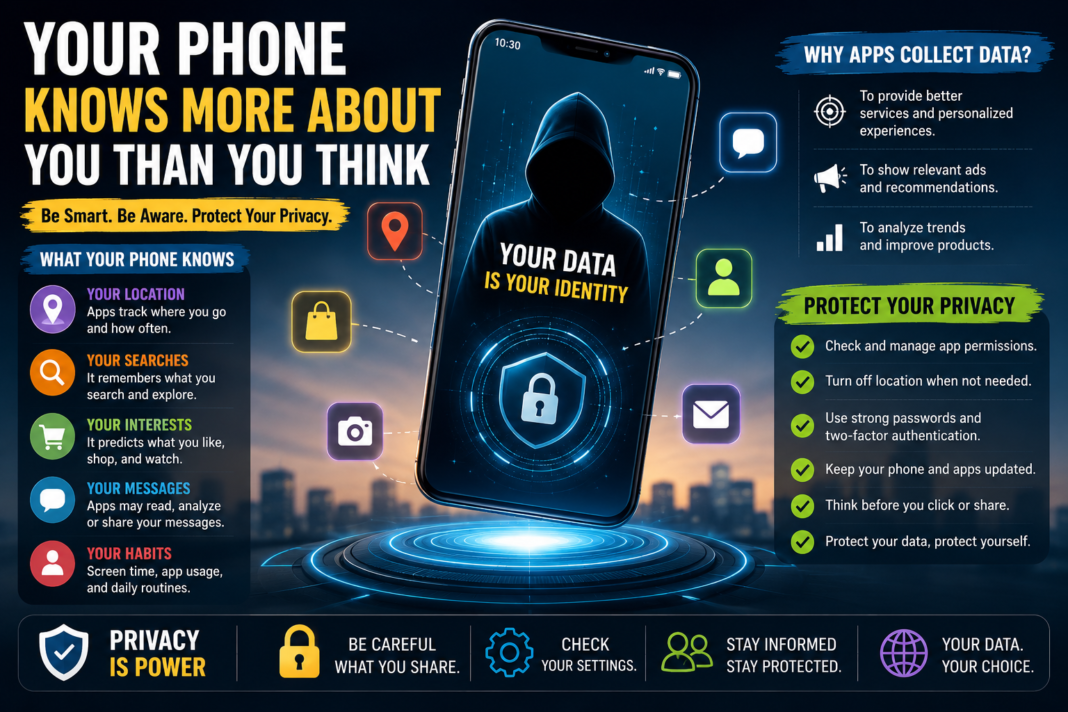
Your smartphone can collect different types of information depending on the apps and permissions you use. This may include your approximate location, search activity, browsing behaviour, app usage, device information, and preferences.
For example, if you frequently search for travel destinations, shopping websites or entertainment, online platforms may use this activity to personalise recommendations and advertisements.
This information can make digital services more convenient, but it also raises questions about privacy and how personal data is being used.
Why Do Apps Collect Data?
Many free apps and online services rely on advertising or personalised recommendations. User data can help companies understand what people are interested in and provide more relevant content.
Location data can help navigation apps provide directions, while fitness apps may use activity information to track progress. In these cases, data collection can provide useful features.
However, users should understand what information an app is requesting and why it needs access to it.
The Role of App Permissions
Maintaining your digital privacy does not mean giving up technology entirely. By taking small, proactive steps every week, you can significantly limit the amount of personal data tracking companies gather about your everyday habits. One of the easiest ways to improve digital privacy is to check app permissions regularly. Some apps may request access to a camera, microphone, contacts, photos, or location.
Not every app needs access to all these features. Reviewing permissions and turning off unnecessary access can reduce the amount of information an app can collect.
It is also important to keep smartphones and apps updated because software updates often include security improvements.
How to Protect Your Privacy
Protecting personal information does not require becoming a technology expert. A few simple habits can make a difference.
Use strong, unique passwords and enable two-factor authentication whenever possible. Avoid clicking suspicious links or downloading apps from unknown sources. Review privacy settings on social media accounts and think carefully before sharing personal information online.
It is also useful to regularly delete apps that you no longer use and check which applications have access to sensitive features.
Review App Permissions: Regularly revoke unnecessary access to location, camera, and microphone.
Clear Browser Cookies: Regularly clear site data and tracker history to prevent targeted ad profiling.
Use Private Search Engines: Consider using privacy-focused search tools that do not track user history.
Convenience vs Privacy
Modern technology offers incredible convenience, but convenience can sometimes come with a privacy trade-off. Personalized recommendations, location-based services, and smart features can make everyday tasks easier, while data collection can create privacy concerns.
The solution is not necessarily to stop using technology. Instead, users should become more aware of what they are sharing and make informed choices about their digital privacy.
Conclusion
Your phone may know a surprising amount about your digital habits, but you still have control over many aspects of your privacy. Understanding app permissions, reviewing privacy settings, using strong security practices, and thinking before sharing information can help you stay safer online.
In the digital age, privacy is not just a technology issue—it is a personal responsibility. The more we understand how our data is collected and used, the better prepared we are to make smarter choices online.
Follow Us: Instagram