

Table of Contents
In today’s digital world, smartphones, social media, streaming platforms, and online communication have become a major part of everyday life. Technology makes life easier, but spending too much time online can also affect our concentration, sleep, productivity, and relationships. This has made taking a screen break an increasingly popular concept among people looking for a healthier relationship with technology.
What Is a Digital Detox?
A digital detox means intentionally reducing the amount of time spent using digital devices. It does not necessarily mean completely avoiding technology. Instead, the goal is to create a healthier balance between online and offline activities.
A digital detox can include spending less time on social media, keeping phones away during meals, avoiding unnecessary notifications, or taking regular breaks from screens.
Why Are People Choosing to Unplug?
One major reason is the growing amount of screen time. People often use their phones for studying, working, entertainment, communication, and shopping. As a result, it can become difficult to disconnect.
Social media can also encourage people to constantly check notifications and updates. This can make it harder to focus on important tasks. Taking regular breaks can help people become more aware of how they spend their time.
Benefits of Reducing Screen Time
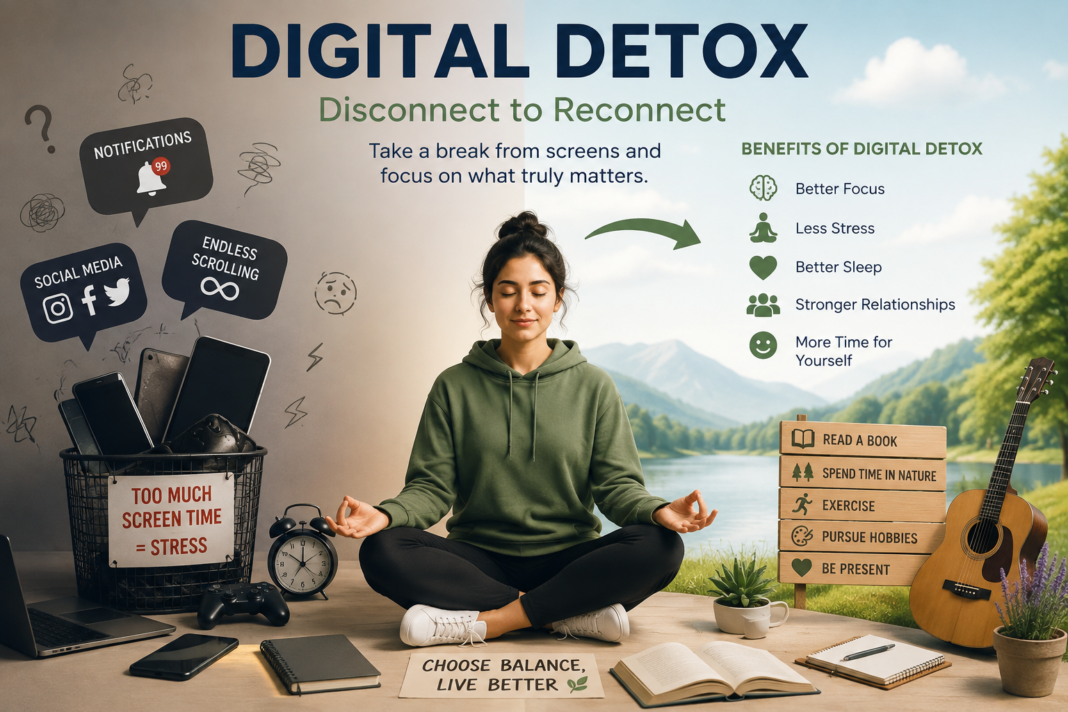
A digital detox can have several positive effects. One of the biggest benefits is improved concentration. Without constant notifications and interruptions, people may find it easier to focus on studies, work, hobbies, or conversations.
Reducing screen use before bedtime can also help create a healthier nighttime routine. Instead of scrolling through social media, people can read, listen to music, talk with family members, or prepare for the next day.
Another benefit is stronger real-world connections. Spending time with friends and family without constantly checking a phone can make conversations more meaningful.
How to Start a Digital Detox?
Starting does not have to be difficult. People can begin with small changes. Turning off unnecessary notifications is a simple first step. Setting specific times for checking social media can also prevent endless scrolling.
Creating phone-free periods during meals or before bedtime can help establish better habits. People can also replace screen time with activities such as walking, exercising, reading, drawing, cooking, or spending time outdoors.
The goal is not to completely reject technology. Instead, it is about making conscious choices rather than automatically reaching for a device whenever there is a free moment.
Is Digital Detox the Future?
As technology becomes increasingly connected to everyday life, learning how to use it responsibly will become more important. Digital detox may become less about completely disconnecting and more about developing healthy digital habits.
Technology itself is not the problem. The real challenge is finding the right balance. When used thoughtfully, digital devices can improve education, communication, entertainment, and productivity without controlling our daily routines.
Tips to Maintain Balance Long-Term
- Set Clear Boundaries: Keep phones out of the bedroom overnight to improve sleep quality.
- Schedule Unplugged Hours: Pick 1–2 hours every evening where screens are completely turned off.
- Find Screen-Free Alternatives: Replace scrolling with reading, journaling, or outdoor activities.
Conclusion
Digital detox is becoming an important lifestyle trend because people are becoming more aware of how technology affects their daily lives. Taking regular breaks from screens can encourage better concentration, healthier routines, and stronger offline relationships.
Follow Us: Instagram